Commuting Tips

Commuter Tips: What Are the Top Strategies for Reducing Traffic Congestion?

Commuter Tips: What Are the Top Strategies for Reducing Traffic Congestion? 150 150 WebFX

If you’re tired of sitting in backups, you’re not alone. Traffic congestion affects thousands of commuters every day, eating into valuable time and adding stress to your routine. Your commuting choices can help create smoother, less congested roadways while improving your own daily experience. Here are some commuter-friendly strategies to reduce traffic congestion, so you can make a difference no matter where you’re headed.

1. Make Public Transportation Part of Your Routine

Public transportation reduces traffic congestion by moving more people while using fewer vehicles and less space. Public transit eases the strain on busy roads during peak hours while allowing commuters to spend their time in more meaningful ways. By using buses, trains or light rail, even just a few days a week, you help take cars off the road.

2. Share the Ride With Carpooling or Vanpooling

If driving is your best or only option, consider sharing the ride with friends or co-workers. Carpooling can reduce traffic congestion by having fewer cars on the road while helping you cut down on travel costs and time spent behind the wheel. Vanpools are another great choice, offering cost-effective, stress-free commutes for larger groups. Both carpooling and vanpooling reduce traffic congestion and boost the sense of community among commuters.

3. Opt for Walking or Biking When Possible

For those who live close to work or transit stops, walking or biking is a win-win. Choosing these active forms of transportation helps reduce congestion, supports your physical well-being and lowers your carbon footprint. Even short trips without a car can make a noticeable impact on your neighborhood’s traffic flow.

4. Be Open to Flexible Schedules and Remote Work

Work schedules also play a big role in reducing traffic congestion. If your employer offers telecommuting, remote work or flexible start times, consider shifting your routine. Traveling outside of rush hour or working from home even one or two days a week keeps more cars off the road when demand is highest.

5. Support Smart Traffic Solutions Locally

Every commuter can advocate for change. Supporting investments in safer sidewalks, better bike lanes, reliable public transit or smart traffic technology helps everyone get around more efficiently. Stay informed about local initiatives so you can help shape smarter, more sustainable communities.

Become Part of the Solution for Reducing Congestion

You might not be able to end traffic jams by yourself, but the strategies you choose each day add up. From public transportation to carpooling, every little bit counts for creating smoother commutes. Explore the best commuting options for your lifestyle by registering with Commute PA to find more resources and solutions to reduce traffic congestion. Start helping your community move better today.
 

become part of the solution for reducing congestion

Work-Life Balance Through Smart Commuting Choices

Work-Life Balance Through Smart Commuting Choices 150 150 WebFX

Lots of people want to strike a healthy work-life balance, but how they get to and from work shapes their daily routines. Many overlook just how significantly commuting impacts work-life balance and transportation wellness. The choices you make about your commute can affect your mood, energy and the time you have for yourself and your loved ones.

The Impact of Commute Choices on Well-Being

When it comes to managing work-life balance with a long commute, the challenges are well known. Spending too much time in traffic can increase anxiety and decrease quality time with friends and family. Commuting can increase your blood sugar, raise your cholesterol, reduce life satisfaction and increase the risk of depression.

Additionally, the way you commute, whether by car, bike, walking or public transit, can help shape your workday and support overall transportation wellness by providing opportunities to destress and transition smoothly between work and home life. Choosing a more comfortable and efficient route can lighten your mood and boost your daily productivity.

Gaining Family and Personal Time Through Smarter Commutes

The right commuting habits can help you achieve true work-life balance. The best commuting option might look different for everyone, but even small changes can recover valuable hours each week for family, hobbies or relaxation. Flexible schedules, remote or hybrid work, and strategic decisions about where to live are all key factors in minimizing travel time and improving your daily quality of life.

Productive Commuting Options to Consider

Managing a work-life balance while commuting involves evaluating the options that save time and improve your overall well-being. Consider these approaches to transform your daily commute into a more positive part of your routine:

  • Walking or biking: For those who can, walking or biking to work is a fantastic way to support physical and mental health. These options are an easy form of exercise that can help separate work responsibilities from home life.
  • Carpooling: Sharing a ride with co-workers or neighbors can reduce stress and expenses while making the daily commute more enjoyable. It’s a simple way to fit friendly conversation and connection into your routine.
  • Vanpooling: Community or organizational vanpooling programs are efficient and affordable. They can also support a stronger sense of community while cutting down on travel-related expenses.
  • Public transportation: For many commuters, buses or trains are the best commuting option for work-life balance. These options let you use transit time to read, plan your day or decompress, making your commute more productive and less tiring.

Create Your Own Balanced Commuting Routine

Rethinking how you commute can have a huge impact on your work-life balance and overall transportation wellness. Review your current routine, explore new options, and register with Commute PA for tools and resources to create your own fulfilling routine.

create your own balanced commuting routine

Rural Commuting in Pennsylvania: 5 Transportation Options Beyond Driving Alone

Rural Commuting in Pennsylvania: 5 Transportation Options Beyond Driving Alone 150 150 WebFX

Between long stretches of road, vehicle maintenance, insurance and rising gas prices, the financial strain of driving alone in rural Pennsylvania adds up. Luckily, other options exist to help you save money and enhance your daily route.

Many rural residents mistakenly believe that shared commuting options are exclusively a big-city amenity, unaware of the dedicated local solutions often operating right in their town. This perception can lead to missed opportunities for convenient and affordable travel.

This guide reveals five affordable rural commuting solutions available right now — all designed to help you explore the benefits of smart commuting while keeping more money in your pocket.

1. Find Your Ride With Carpooling and Vanpooling

Carpooling and vanpooling are the most accessible commuting options for rural Pennsylvania residents. Unlike public transit, carpooling and vanpooling require no fixed routes or schedules, just a shared destination and a willingness to ride together.

Carpooling is simple. Two or more people traveling to the same area split driving and fuel costs, reducing each person’s gas and vehicle wear expenses. Vanpooling takes this idea further. A group of five to fifteen commuters shares a van for a regular route, often with employer support or subsidies. This makes it ideal for rural workers who travel longer distances to a common job center.

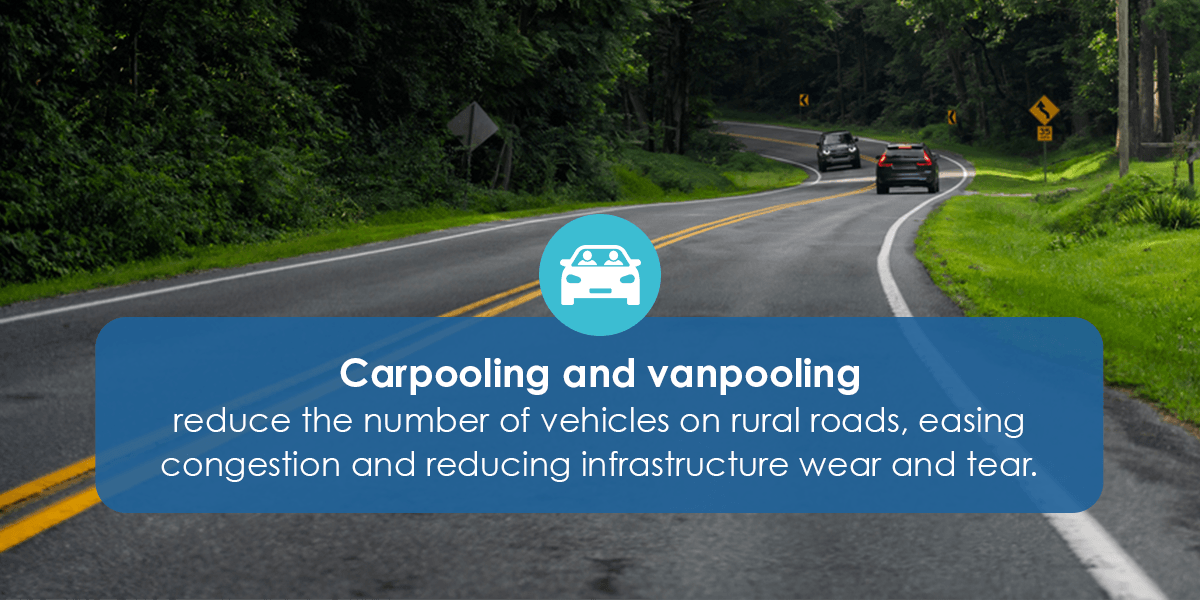
Beyond cost, carpooling and vanpooling reduce the number of vehicles on rural roads, easing congestion and reducing infrastructure wear and tear. They also give commuters back time they would otherwise spend focused on the road.

Commute PA makes it easy to start a carpool or explore the benefits of joining a vanpool in the nine-county service area, including Adams, Berks, Cumberland, Dauphin, Franklin, Lancaster, Lebanon, Perry and York counties.

image of cars on a back road with a text box including how carpooling and vanpooling help with rural commuting

2. Use Demand-Response Transit for On-Call Rides

One of the most common objections Commute PA hears from rural residents is straightforward… “There is no transit available where I live.” Demand-response transit is specifically designed to serve communities where fixed bus routes are impractical, and it may already be available in your area.

Demand-response transit, also known as shared-ride service, functions like a shared, scheduled taxi. Riders call ahead to book a trip, and a vehicle comes to their location, taking them to their destination alongside other passengers heading in the same direction.

Unlike fixed-route bus services, demand-response transit does not require a set schedule or a nearby bus stop. It is designed specifically for rural and suburban communities where Pennsylvania public transit cannot operate efficiently.

The federal rural transit funding program supports these rural transportation options in Pennsylvania, making them affordable and accessible for eligible residents. These services are particularly vital for older residents and those with disabilities who may not be able to drive themselves.

3. Ride With Local and Community Bus Services

While fixed-route bus service is not available in every rural corner of Pennsylvania, more communities have access to local and community bus services than most residents realize.

Fixed-route community bus services operate on set schedules between towns, job centers, medical facilities and transit hubs. They offer predictable, reliable transit for commuters whose routes align with the schedule.

While rural public transit in Pennsylvania has historically faced challenges such as limited funding and vast geographic areas, existing systems annually provide transportation to hundreds of thousands of rural residents. For commuters whose routes align with available bus service, public transit eliminates fuel and parking costs and the stress of navigating rural roads in poor weather. The first step is to check which services are available in your area.

4. Try an Active Commute by Biking or Walking

Biking or walking to work is an active form of transportation and the most cost-effective commute option. Zero fuel costs, zero parking fees and significant health benefits make it appealing for rural commuters who live within a reasonable distance of their workplace.

Rural bike commuting is more viable than many assume. While rural roads lack dedicated bike lanes, many rural routes have lower traffic volumes and wider shoulders that can safely accommodate cyclists.

Safety is a top consideration on rural roads, particularly during winter months when ice and reduced daylight can shift conditions quickly. For active commuters, staying visible, like using lights and wearing reflective gear, and staying alert to the road, goes a long way toward making a rural commute safe year-round.

Winter weather is the primary seasonal challenge. Ice, snow and reduced daylight make biking and walking less practical during Pennsylvania’s colder months. Many active commuters use this mode seasonally and combine it with other smart commute options during winter.

For commuters who live within two to five miles of their workplace, biking is a strong option. A comfortable pace covers that distance in fifteen to twenty-five minutes, comparable to driving when parking and traffic are factored in.

Commute PA’s active transportation resources provide additional guidance and tips for making an active commute work in a rural setting.

5. Work from Home With a Telecommuting Option

Telecommuting is the ultimate solution for rural commuting. When the commute disappears entirely, so do all of its associated costs, stresses, and time demands.

Telecommuting, working from home either full-time or on a hybrid schedule, eliminates travel costs completely, saving rural commuters thousands of dollars per year in:

  • Fuel.
  • Maintenance.
  • Vehicle depreciation.

The trend toward remote and hybrid work has accelerated significantly. United States Census Bureau commuting data shows a dramatic shift in workers who work from home at least part of the week, creating new opportunities for rural workers.

Many organizations have flexible work policies. For workers whose roles can be performed remotely, telecommuting is worth raising with an employer. Framing the request around productivity, cost savings, and reduced absenteeism due to weather-related road closures can make a compelling case.

Even a partial telecommuting arrangement, working from home two or three days per week, can reduce annual mileage and fuel costs significantly.

Commute PA provides resources to help telecommuters explore whether it is a viable option for their situation.

Start Your Smarter Commute With Commute PA

For your rural Pennsylvania commute, driving alone is not your only option. There are affordable rural commuting solutions that many people don’t realize are available and can transform your daily journey to work.

Commute PA is here to help. This free program provides tools and personalized support to help you find what works for your situation. No commitment required. Start by using the Commute PA Commute Calculator to see how much you’re spending on driving alone and how much you could save.

Your smarter commute starts today. Sign up for Commute PA and explore what’s possible.

Start your smarter commute with Commute PA

Skip to content