
Common smart commute options, such as carpooling, taking public transportation, biking, walking, telecommuting or vanpooling, can benefit you financially, physically and mentally. Each choice can help you in a different way, depending on your schedule, distance and preferences. Some commute options in PA let you save money, while others provide more flexibility and ease your driving anxiety. This guide looks at each option in detail so you can decide what works best for you.
Carpooling
Carpooling involves riding with co-workers, neighbors or friends along similar routes. Everyone agrees on schedules and pickup points, and driving responsibilities are rotated. Commuting costs are also shared, which helps reduce fuel expenses and limits wear and tear on vehicles, lowering maintenance costs over time.
Carpooling is the best commute option when:
- You have a consistent schedule and start time.
- You live near co-workers or other commuters sharing the same schedule.
- You want to cut down on driving stress.
Additionally, carpooling creates space for conversation and connection, which can make the commute feel more engaging and less isolating.
Here are some tips to get started:
- Talk to co-workers first since shared destinations make coordination easier.
- Use a Park and Ride map to find a convenient, central meeting location.
- Start with a simple schedule and adjust as needed once the routine is established.
- Set clear expectations early around timing, cost sharing and communication.
Taking Public Transportation
Public transportation is a tried-and-true commute option across Pennsylvania. Buses and trains connect neighborhoods, suburbs and urban centers and offer benefits beyond cost savings.
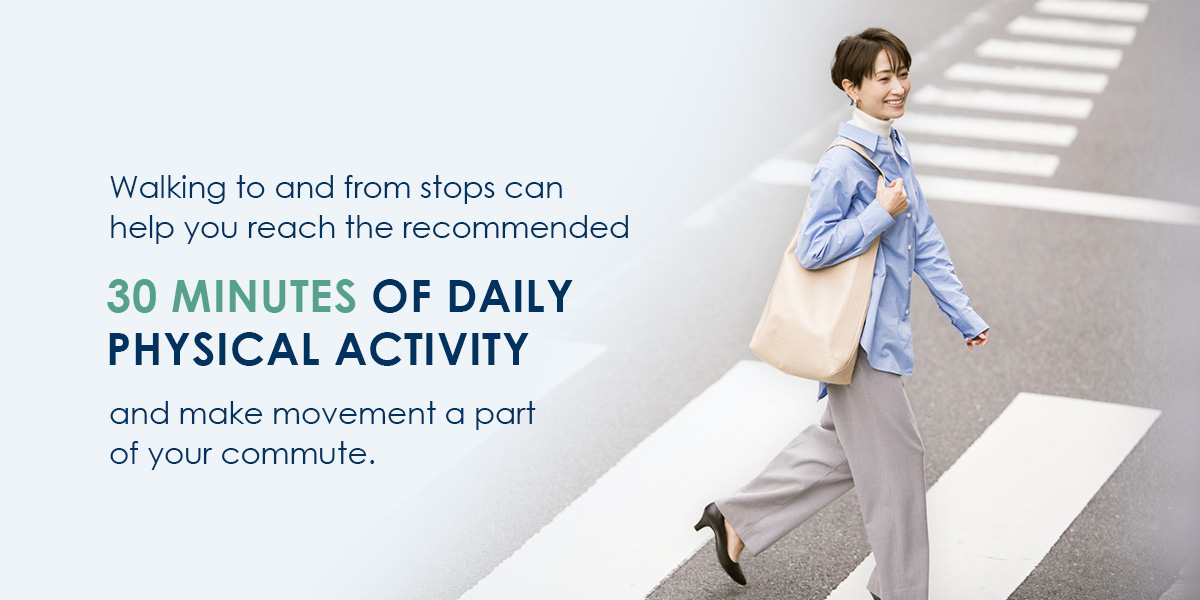
Walking to and from stops can help you reach the recommended 30 minutes of daily physical activity and make movement a part of your commute. You don’t have to drive and can spend that time reading, working or simply relaxing. Plus, public transportation reduces traffic and emissions per rider, leading to cleaner air in your community.
If you have access to nearby stops and your routine matches route timetables, public transportation can provide a steady and manageable way to get to work. Start by locating the nearest service and reviewing route schedules.
Biking
Biking is an active commuting option that offers an efficient way to work exercise into your day. It can help improve heart health and reduce the risk of chronic conditions. Biking also gives your brain a break by allowing you to disconnect from daily stressors and engage with your surroundings. So, you arrive at work feeling clearer, calmer and more focused.
Since you’re pedaling instead of paying at the pump, biking is one of the lowest-cost commuting options. Those without a bike can still consider this smart commuting option by looking for nearby bike-sharing programs or rental services.
If you are within about 2-6 miles, biking is just as fast as driving in traffic, and sometimes faster since you avoid parking hassles. To make the switch, think about the availability of bike lanes or low-traffic routes along your way. Consider whether your workplace has amenities, like bike racks and shower facilities, to freshen up before clocking in.
Walking
If you live close to your destination, walking is the simplest commute option. Like biking, walking as active transportation delivers physical and mental health benefits by building movement into your day without any extra effort.
Walking burns calories at a steady, sustainable rate and strengthens your muscles and joints. According to the American Council on Exercise (ACE), a 150-pound person walking at a moderate pace for 20 minutes burns 74 calories. Walking also boosts blood flow to your brain, which positively affects the areas that regulate stress.
Consider walking to work when you live within 1-2 miles of your workplace, and there is a route with safe sidewalks and crosswalks. Give yourself a buffer when planning your departure time so the commute feels relaxed rather than rushed. Listen to audiobooks, podcasts or music to make the time feel shorter and more enjoyable.
Telecommuting
Working remotely removes the commute entirely on the days you do it. Two or three remote days per week can meaningfully cut transportation costs and save stress and time. It also makes it easier to maintain healthy habits, like eating a proper meal in the morning and taking regular breaks, which can improve both your physical and mental well-being.
Consider telecommuting if your job allows it and you:
- Have an area where you can focus without frequent interruptions.
- Have reliable internet and the tools you need to work productively.
- Are comfortable with digital communication.
Vanpooling
Vanpooling is where 5-15 riders share a single van and travel together along a regular route. It lowers commuting costs per person, which is particularly valuable when driving long distances. Vanpooling costs about $0.21 per passenger mile, according to the FY2024 National Transit Database.
Vanpooling is a strong fit for commuters with longer, more predictable routes, such as across counties. It works when a larger group can commit to a shared schedule. It’s also an accessible option if you are coming from areas with fewer direct connections.
To get started, follow these tips:
- Set up a Commute PA account on our website or app.
- Complete your profile so we can help match you with commuters who share similar routes and schedules.
- Reach out to us to organize a meeting once you have found your matches. During this time, your group can finalize details like vehicle choice, route, schedule and shared expenses.
- Check with your workplace about the availability of the $340 federal pre-tax benefit for vanpooling. We can also help speak to your employer about this.
Which Commute Option Is Best?
The best commute option is the one that fits your life. Here’s a recap table to help you think it through:
| Commute option | Best when you have | Key benefits | What to consider |
| Carpooling | A consistent schedule and nearby co-workers or commuters |
|
Involves coordinating schedules and pickup points |
| Taking public transportation | Access to nearby stops and routes that match your timetables |
|
Involves following routes and timetables |
| Biking | A short to moderate commute with safe or low-traffic routes |
|
Involves access to bike-friendly routes and workplace amenities |
| Walking | A very short commute with safe sidewalks and crossings |
|
Involves safe routes and extra travel time |
| Telecommuting | A role that allows remote work and a suitable home setup |
|
Involves setting up a space to work and establishing clear boundaries with others at home |
| Vanpooling | A long-distance commute and a group of 5-15 riders with similar schedules |
|
Involves organizing a larger group and sticking to a fixed schedule |
Create a Personalized Commute Plan With Commute PA
We promote sustainable, smart commuting across Adams, Berks, Cumberland, Dauphin, Franklin, Lancaster, Lebanon, Perry and York counties. Sign up for free online or download our app to access resources for planning and recording your trips. We can help you:
- Match rides for carpooling or vanpooling with people along similar routes.
- Plan public transportation trips, including nearby stops, schedules and route options.
- Find safe biking and walking routes and identify nearby facilities, like bike racks or trails.
- Combine multiple modes of transportation.
- Have peace of mind with reimbursement for your ride home from work in a qualified emergency.
You can also record your rides on our app and earn points to enter our monthly gift card drawings. Join our community and find carpooling partners with us today!