Posts By :

WebFX

The Cost and Financial Perks of Ditching Your Solo Drive

The Cost and Financial Perks of Ditching Your Solo Drive 150 150 WebFX

Are rising fuel prices, constant wear and tear on your vehicle and endless parking fees draining your wallet? It is time to rethink your daily commute. Discover how smarter transportation choices can transform not just your journey, but also your financial well-being, freeing up significant savings you might not even realize are possible.

How Much Does Your Commute Cost You?

Beyond the daily grind, solo driving in Central PA carries a significant price tag. Let’s uncover the true expense:

  • Obvious costs of commuting: Gas, parking and tolls quickly add up. A solo commute means bearing 100% of these expenses, which can amount to a large portion of your annual budget.
  • Hidden expenses: Factor in frequent wear and tear on your vehicle, routine maintenance like oil changes and potentially higher insurance premiums. These unseen costs quietly drain your savings.
  • Time and health: Extended periods in traffic contribute to physical strain and mental stress. This lost time also means fewer opportunities for relaxation or for engaging in activities you enjoy.

The Perks of Smarter Commuting

Choosing smarter transportation options unlocks a host of benefits, both financial and personal:

  • Significant cost savings: Drastically cut your overall commuting expenses. Whether you carpool, vanpool, telecommute or use public transit, you’ll share or reduce costs for fuel, parking and tolls, making your journey far more affordable.
  • Less car maintenance: Fewer miles driven means less wear and tear on your vehicle. Expect reduced maintenance needs and lower long-term car ownership costs.
  • Potential insurance premium reductions: Driving less leads to lower mileage on your vehicle, which might qualify you for discounts on your car insurance premiums.
  • Enhanced health and well-being: Options like walking or biking completely eliminate fuel costs while boosting your physical activity and mental clarity, contributing to a healthier, happier you.

Commute PA Makes Your Smart Commute Easy

Commute PA is a completely free program that makes embracing the benefits of smart commuting simple. If you commute in Adams, Berks, Cumberland, Dauphin, Franklin, Lancaster, Lebanon, Perry or York counties, you can use the Commute PA app or online platform to connect with fellow commuters traveling similar routes.

Download the Commute PA app or create your own profile online to start accessing personalized route planning and ride-matching. Plus, you can enter into our monthly gift card drawings when you log your trips in our app.

Are you ready to ditch your solo drives and cut unnecessary expenses? Travel smarter and easier with Commute PA today.
Commute PA Makes Your Smart Commute Easy

The Ultimate Guide to Carpooling in Central PA

The Ultimate Guide to Carpooling in Central PA 150 150 WebFX

Imagine commuting without worrying about constant traffic, long drive times, parking stress and rising fuel costs. Carpooling transforms your daily journey into an opportunity for connection, convenience and considerable savings, turning those frustrating drives into a refreshing shared experience.

Why Carpool?

Carpooling offers significant advantages beyond just sharing a ride:

  • Reduce traffic: Fewer cars mean smoother, faster commutes for everyone.
  • Lower stress: Alternate driving days allow you to relax as a passenger, listen to music, read or simply decompress.
  • Save money: Share the cost of gas and tolls, plus reduce wear and tear on your vehicle. This means more money in your pocket for other priorities.

How to Form a Carpool in Central PA

You’ll be amazed at how straightforward it is to form a carpool in Central PA, especially with the help of Commute PA. Follow these simple steps:

  1. Join Commute PA: Download the free Commute PA app or create your profile online, where you can connect with potential carpool partners in Central PA.
  2. Assess your car: Is it suitable for group rides? If it’s reliable, well-maintained and has good seating, then you’re good to go.
  3. Align schedules and routes: Our platform helps you find partners with similar commutes and coordinate schedules.
  4. Set up communication channels: Next, set up a group text so everyone knows their responsibilities and when they should be ready for pickup.

Top Carpooling Tips and Best Practices for Sharing Rides

Carpooling can be fun if you do it right. Here are some best practices to follow:

  • Discuss expenses up front: Decide early how tolls will be split among your carpool partners.
  • Set the atmosphere: Talk about the little things like music preferences and how much conversation feels right so that everyone on board is comfortable during the rides.
  • Determine driving duties: It’s good practice to create driving schedules so everyone knows which day of the week they are driving.

Start Your Smart Commute Today

You can transform every ride into a chance to save time, money and energy. Commute PA is a completely free program designed to help you do this even better. By simply downloading the Commute PA app or creating your free profile online, you can find carpool partners in Central PA. As a plus, you can enter into our monthly gift card drawings when you start recording your smart commutes on our platform.

Start your smart commute today with Commute PA.

Start your Smart Commute Today with Commute PA

How Active Commuting Can Boost Your Health and Happiness

How Active Commuting Can Boost Your Health and Happiness 150 150 WebFX

Exercise in any form, whether walking, running, biking or swimming, is good for the body. In fact, lack of movement can be detrimental to your health. Sedentary lifestyles increase the risk of mortality across the board and increase the likelihood of developing health conditions, including cancer.

An easy way to stay active is to substitute day-to-day, sedentary-based activities with those that incorporate more physical movement. Your daily commute is a perfect example. Active commuting can boost your health and happiness by promoting sustained activity, improving overall physical health and enhancing mental acuity.

The Science Behind a Healthier Commute

Active commuting in all forms improves cardiovascular fitness, weight management, energy and mental health. Incorporating physical activity into your daily routine can reduce stress hormones such as cortisol and increase “feel-good” hormones like endorphins and serotonin, meaning there’s a clear scientific basis for these positive changes.

Most people already know that an active lifestyle is better for overall health, but let’s take a look at the science. In a report published in BMJ Public Health, researchers used data from the Scottish Longitudinal Study to examine the health benefits of biking or walking commutes and their impact on multiple health outcomes.

Their findings were significant:

  • Cyclist commuters had a lower risk of all-cause mortality, hospitalizations, cardiovascular disease and cancer
  • Pedestrian and cyclist commuters showed lower risks for mental health problems
  • Active commuters, including cyclists and pedestrians, had a lower risk of any hospitalization and cardiovascular prescriptions
  • Active commuters were less likely to experience adverse mental and physical outcomes than non-active commuters

It’s clear that the health benefits of commuting by bike or walking were far greater than those of traditional driving.

Does Active Commuting to Work Affect Happiness?

Your commute may significantly affect your overall well-being. Long, inactive commutes can contribute to higher levels of stress, increased anxiety — especially in heavy traffic — and heightened exposure to pollution. Your daily drive may also lead to boredom and exhaustion, negatively affecting your health and happiness.

An active commute can make your trip to and from work more enjoyable while providing health benefits.

What Are the Benefits of Active Commuting?

Active commuting to work, such as biking or walking, offers a wide range of tangible health improvements.

These benefits include:

  • Improved physical and mental well-being.
  • Enhanced cardiovascular health.
  • Increased energy and stamina.
  • Better mood and reduced stress.
  • Support for healthy weight management.
  • A stronger immune system.

Beyond the physical, active commuting fosters a sense of accomplishment and contributes to a happier, less-stressed daily routine. It’s a simple change that makes a big difference.

Embrace Active Commuting With Commute PA

Commute PA offers transportation solutions to improve your productivity and health, while helping the environment. Ready to discover the best options for your journey? We’ll guide you through viable modes of active commuting and show you how to make them work for you! Join Commute PA today!

Embrace active commuting with Commute PA


Vanpool vs. Carpool: Which Is Right for You?

Vanpool vs. Carpool: Which Is Right for You? 150 150 WebFX

Commuting is a significant part of your daily life, often involving traffic, fluctuating fuel costs and busy roads. Fortunately, sustainable alternatives exist that can cut costs and make your commute more enjoyable. Vanpooling and carpooling are popular options.

Understanding the differences between a vanpool and carpool is crucial in determining which option best suits your commuting needs.

What Is a Carpool?

A carpool is the most familiar form of shared commuting. It typically involves two or more people sharing rides in a personal vehicle, often rotating who drives. Carpools can be organized directly between friends, neighbors or co-workers who have similar routes and schedules. Organizations like Commute PA can also help coordinate a carpool.

Key characteristics of carpooling include:

  • Flexibility: Carpools offer a high degree of flexibility. Routes and schedules can often be adjusted on the fly, depending on the needs of the small group.
  • Cost-sharing: Expenses like fuel and tolls are usually split among the riders, leading to significant savings compared to driving alone.
  • Vehicle: Participants typically use their personal vehicles. They may take turns driving or have one designated driver.
  • Group size: Carpool groups are often smaller, consisting of around two to four people.

Carpooling is an excellent choice for those who value spontaneity and have a small, reliable group with compatible schedules.

What Is a Vanpool?

Vanpooling takes the concept of shared commuting a step further. It involves a larger group, usually seven to 15 people, sharing a ride in a passenger van. Unlike carpools, vanpools often utilize a dedicated van, which may be leased by the group, provided by an employer or facilitated by organizations like Commute PA.

A primary driver is designated, and other members contribute a monthly fee to cover expenses such as fuel, maintenance, insurance and the lease of the van.

Key elements of vanpooling include:

  • Structured: Vanpools are typically more organized, often with set schedules and routes.
  • Cost-effective for long distances: This type of commute is ideal for longer trips, as the shared cost for a larger group in a dedicated vehicle can result in significant savings per person.
  • Vehicle: A larger passenger van, not a personal car, is typically used for vanpooling. This often means more comfort and space.
  • Group size: The group size for vanpooling tends to be larger, typically seven to 15 individuals.

Vanpooling is a great option for those with longer commutes, consistent work schedules and a desire for a more comfortable ride.

Enhance Your Commute With Commute PA

Ultimately, both vanpooling and carpooling offer excellent benefits. Commute PA is your go-to resource for finding rides for either option, connecting you with others in your area who share similar commute patterns.

Take the first step toward a smarter and more economical commute! Join today.


Enhance your commute with CommutePA

Public Transit Commuting Tips for a Better Ride

Public Transit Commuting Tips for a Better Ride 150 150 WebFX

Whether you are headed to the office or simply running errands, taking public transportation is one of the most cost-effective and sustainable ways to commute. Here are some tips to make your public transit experience more enjoyable.

Plan Your Trip Like a Pro

The easiest commutes actually start long before you leave your house. Planning your commute is not just about ensuring you reach your destination. It is also a great way to reduce travel stress and have a better ride.

Start planning your trip by bookmarking your local transportation program or transit authority’s website. Different counties in Pennsylvania have their own transit authorities. For example, if you reside in Berks County, your transit authority is Berks Area Reading Transportation Authority, or BARTA, while Lancaster has Red Rose Transit Authority, or RRTA. On these pages, you will find ride alerts, learn about delays or detours, and gain access to other updates.

You can also use a journey planner to minimize the planning work. Journey planners can help you find efficient routes, calculate fares and even estimate walking times from your place or office to the stop. This information can help you know the best time to leave for the stop so you are not scrambling. Platforms like Commute PA offer a central hub where you can find essential planning resources tailored to your specific region.

Dress for the Journey

Temperatures outside and inside a bus will differ significantly based on factors such as the commuter load. So, our second bus commute tip is to dress in layers, allowing you to remove some should the temperature rise. If you are heading to the office, keep it professional with a business casual sweater, which you can easily stow away in your travel bag.

Invest in a Good Bag

One of the best buys for any commuter is a lightweight, durable backpack with multiple compartments. Whether you are a student or a professional, you will need a place to store your laptop, books, files and some daily essentials. Getting a durable and waterproof backpack is a great way to keep all your belongings safe and organized during your commute.

Build Your Commuter Kit

You can create a personalized travel kit based on your travel style. If you use your mornings to prepare for the day ahead, you will need a productivity kit with a notebook to plan out your day and maybe a tablet for a more comfortable experience reading emails.

But if you use the commute for some “me” time, then assemble a relaxation kit with headphones and a downloaded playlist, podcast or book. However, remember that a public transit safety tip worth practicing, even with headphones on, is to remain aware of your surroundings.

Whether your ride is your planning block or relaxation time, key basics to have in every kit include hand sanitizer, a reusable water bottle and portable charger or power bank.


Make your commute something to look forward to

Last-Mile Commute Options

Last-Mile Commute Options 150 150 WebFX

Last-Mile Commute Options

As we all know, it’s not always about the destination — it’s sometimes all about the journey.

The “last mile” refers to the final distance in your journey, be it en route to work, school or an event, that is often not reachable by the same mode of transportation used for the main part of your journey. This obstacle poses numerous problems for commuters of all kinds, as well as for the environment.

Finding a solution to the last-mile conundrum involves finding a hassle-free, inexpensive transportation method that makes your journey more seamless from beginning to end. Keep reading to discover how smart trips can transform your commuting experience.

Last-Mile Commute Issues

Commuters face multiple challenges due to inadequate transportation methods, either at the start or end of their journey to a destination.

Longer Commutes

Despite the rise of hybrid or at-home working, the average commute length in America has been on the rise. In 2024, over 9% of commuters traveled over 60 minutes to get to work, and the average commute time reached 27.2 minutes. When there is no mode of transportation to take a commuter directly to their destination, journeys can take much longer than necessary.

Over time, long commutes can take a toll on mental health. Those who undergo long commutes may experience:

Heavier Reliance on Cars

When public transit can’t get you directly to your destination, it can be easy to turn to the seemingly hassle-free mode of transportation — driving. However, the more we rely on cars as a society, the more damage we do to our planet.

Long car commutes have devastating effects on the environment, including:

  • Air pollution: Vehicle emissions pollute our planet’s air with carbon dioxide, methane and other pollutants.
  • Water pollution: Runoff from roads carries toxic substances like oil and diesel to our water sources.
  • Destruction of habitats: The extraction of oil and gas, which is largely driven by consumer demand for fuel, is highly destructive to the natural habitats of animals and plants.

There are many things you can do to combat climate change on a personal level, and reducing your use of a personal car is one of them.

Physical Health Challenges

Alongside the mental toll that long or complex commutes can take on a person, sedentary commutes can also affect people’s physical health and activity.

When using one mode of transportation for your entire journey, such as a personal car, you might think you are eliminating the first- and last-mile commuting issue. But instead, you may be causing more problems for your well-being.

Sitting for more than four to six hours a day is generally considered sedentary. The more time you spend sitting during your commute, the more sedentary your lifestyle will be.

The implications of this can include:

Last-Mile Commuting Solutions

First- and last-mile commuting doesn’t have to be so arduous. We are lucky enough to exist in an era where technology is constantly advancing, and so are our transportation options.

If you want to improve your commuting experience and eliminate the last-mile complication, there are many last-mile commute options to consider.

Walking and biking are some of the best solutions to the last-mile dilemma

Walking and Cycling

Old-fashioned, active methods of transportation, such as walking and cycling, are some of the best solutions to the last-mile dilemma. Besides getting you to your destination without vehicle-related complications, like rush-hour traffic, these methods also offer numerous benefits for your health and the environment.

The health benefits of an active commute include:

  • Reduced mortality risk: Frequent 20-minute cycles or 30-minute walks can reduce mortality rate by 10% or more.
  • Lower BMI: Cycling to work has been linked to maintaining a lower body mass index (BMI).
  • Stronger immune system: Frequent walking has been associated with boosted immune systems.
  • Reduced breast cancer risk: Women who walk seven hours or more per week are 14% less likely to develop breast cancer than those who walk three or fewer hours.
  • Eased joint pain: Walking has been linked to both the prevention and reduction of joint-related ailments, like arthritis.

Public Transit

Traveling by bus or train offers commuters a budget-friendly, eco-conscious and relaxing way to commute. Regional transit offers multiple advantages over driving, including:

  • Productivity: Commuters can dedicate their time on public transit to anything they like, be it catching up on work, responding to emails or staying in touch with friends and family.
  • Relaxation: By removing the need to drive yourself to your destination, you can sit back, relax and enjoy the journey.
  • Affordability: Public transit is more affordable than owning and maintaining a private vehicle, and you don’t have to factor in extra costs like fuel and parking.
  • Sustainability: By switching out cars for public transit options, you can decrease your carbon footprint and contribute to reducing global emissions.
  • Social interactions: Public transportation allows commuters to connect with others and interact with people they might otherwise never meet.

Carpooling

Carpooling is a convenient and eco-friendly way to cut your commute costs and eliminate the last-mile problem. When you choose carpooling over driving alone, you can benefit from:

  • Lower commuting costs: Sharing a car journey with others enables you to split the costs of gas, tolls and parking with others.
  • Reduced emissions: With personal vehicles responsible for the majority of society’s greenhouse gas emissions, carpooling can significantly lower your carbon footprint.
  • Human connection: Sharing your commute with others gives you the chance to socialize and interact with fellow commuters.

Telecommuting

Since the COVID-19 pandemic, more employees across the globe have opted for remote working over traditional in-office work.

Telecommuting is the greenest mode of transportation. Whether you work fully remotely or on a hybrid basis, it has multiple benefits for your personal well-being and the environment:

  • Lower emissions: By eliminating commutes entirely, telecommuting contributes to lower greenhouse gas emissions and improved air quality.
  • Better work-life balance: By working from home, people have more flexibility in their schedule to prioritize what is important to them.
  • No commute costs: Without a commute, there are no commute costs! Working from home eliminates the need to figure out the last-mile dilemma, too.

Streamline Your Journeys With Our PA Commuting Programs

At Commute PA, we are dedicated to enhancing your commuter experience. By joining our commuting programs, you can transition away from costly single-occupancy vehicles to access resources to help with the last mile of your commute.

Whether you are a business looking to streamline your employees’ commutes or an individual in need of a better mode of transportation, Commute PA can guide you in finding the right route. From our ride-matching programs to our practical resources, we can help you find smarter ways to get from A to B.

Join our program for free or contact our team to find out more today!

Streamline your journeys with Commute PA


How Can You Make Your Commute More Cost-Effective?

How Can You Make Your Commute More Cost-Effective? 150 150 WebFX

Key Takeaways:

1. To reduce your commuting costs, choose alternatives to driving alone by carpooling or vanpooling to split fuel and parking costs.
2. Explore carpooling programs to connect with commuters traveling similar routes.
3. Reducing commuting expenses increases your disposable income, improves debt management flexibility, and contributes to environmental sustainability.


Commuting is a necessary part of our daily lives. However, transportation is not always cheap and affordable, whether getting to work, meeting friends or running errands. If you’re a daily commuter, you know how quickly commuting costs can affect your budget. But what if there were more affordable ways to get to work and other places? This guide answers this question and provides tips on how to reduce commute costs.

Why Is It Important to Save on Commuting Costs?

If you work remotely, you may not feel the effect of commuting. But if you work at an office or are a frequent commuter, you’ll spend a ton on commuting. Over time, these costs, ranging from fuel to maintenance, add up significantly. You can enjoy the following benefits when you save on commuting costs:

  • Increased disposable income: When you spend less on commuting, you can use that money for other things.
  • Improved debt management: With commute cost savings, you have more flexibility to free up money for debt repayments. For instance, if you reduce your commuting costs by $200 a month, you’ll save $2,400 annually, which you can put toward repaying your debt.
  • Increased contribution to environmental sustainability: Saving commuting costs involves exploring several alternatives to driving, some of which benefit the environment. By adopting options like cycling and walking, you foster environmental sustainability.

How to Save Money on Your Commute

You can choose from various options to reduce your commute costs. Explore these cost-saving tips:

Choose to Carpool or Vanpool

If you have work colleagues or friends who live nearby or work close to your office, consider carpooling with them. This way, you can split fuel and parking costs. Alternatively, you can explore carpooling programs to connect with other commuters going to similar destinations on the same route. Additionally, you can team up with five or more friends or colleagues to use vanpooling services for more convenient and cost-effective commutes.

Beyond cost-saving, you can enjoy the following additional benefits when you carpool:

  • Less traffic and stress: Carpooling allows you and other passengers to enjoy faster and more efficient travel.
  • Social benefits: Unlike when you commute alone, carpooling allows you to build social connections with other carpoolers.
  • Additional incentives: Depending on your company policy, you may receive extra incentives for carpooling, such as financial rewards and reserved parking.

Opt for Public Transportation

Instead of driving daily, you can reduce commute costs by using public transportation now and then. This option is excellent, especially if you live or work near bus stops or train stations. To maximize public transit, take advantage of weekly or monthly passes, discounted fare schemes and fare capping systems. Some added benefits of embracing public transit include:

  • Extra time: Besides cost savings, taking public transit gives you the added benefit of free time during your commute — you can catch up on your favorite show, knit or finish a chapter in a book.
  • Reduced traffic congestion: More people can fit into single public transit vehicles like buses and trains. When more people use public transportation, there are fewer cars on the roads, and by extension, less traffic congestion.

Walk or Bike

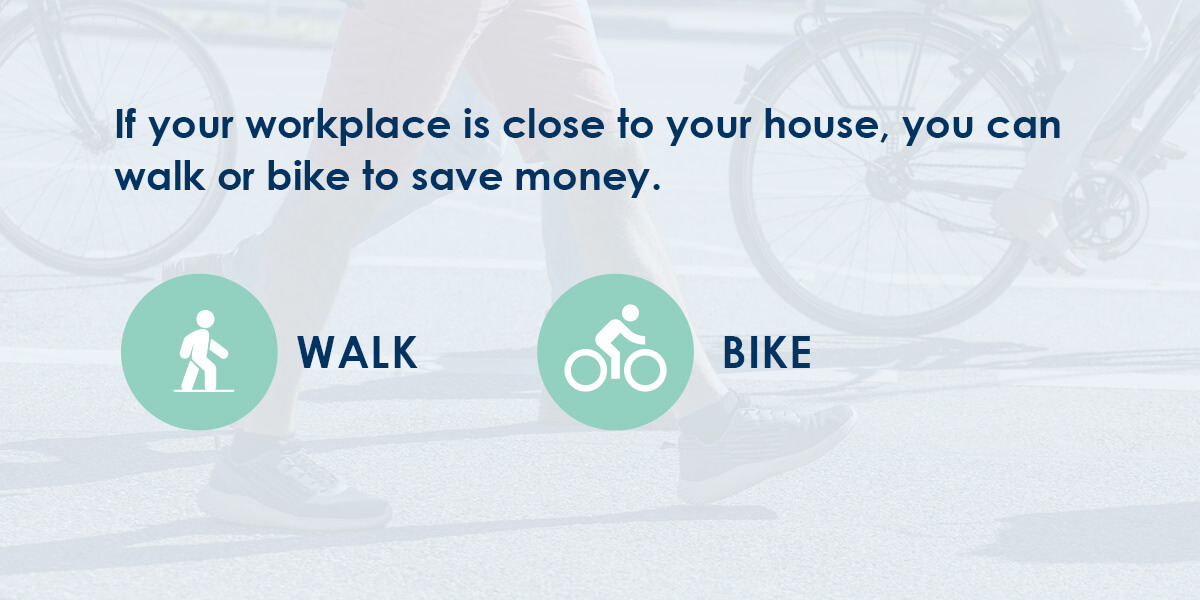
It goes without saying that taking a walk or riding a bike is much less expensive than driving a car. If your workplace is close to your house, you can walk or bike to save money. These means of moving around also have several health benefits, including:

  • Reduced risk of heart disease.
  • Calorie burning and potential weight loss.
  • Increased muscle strength.
  • Stress reduction and mood improvement.

While walking or cycling is an affordable way to get to work, it is essential to practice safety and awareness. Here are some safety tips to practice:

  • Wear bright or reflective clothing when cycling at night to make yourself more visible to other road users.
  • Wear correctly sized helmets.
  • Always use designated crossing points.
  • Be aware of your surroundings at all times.

If your workplace is close to your house, you can walk or bike to save money.

Maintain Your Vehicle Regularly

Fuel is a major contributor to the high commuting cost, and a poorly managed car can make it even more expensive. Neglecting car maintenance can lead to your vehicle developing faults with crucial elements that reduce engine efficiency and increase consumption. Repair costs for serious faults can also dip into your budget. Maintaining your car regularly keeps it in good working order and maintains healthy fuel consumption. Here are some healthy practices you can adopt to ensure your vehicle is functioning optimally to reduce fuel consumption:

  • Check tire pressure regularly to ensure they are not under-inflated.
  • Replace clogged air filters regularly.
  • Use high-quality oil and change it frequently.
  • Conduct regular wheel alignment checks.
  • Avoid sudden braking and acceleration.

Use Employer Provisions

Learn more about the offers your employer has in place to reduce transportation costs. Depending on the company, you may have access to parking discounts or preferential parking and pre-tax benefits. If your employers don’t have such provisions, feel free to have open conversations with your HR representative.

Your employer may also have remote or hybrid work provisions that can reduce your commuting altogether.

Planning and Budgeting Tips for Reducing Commuting Costs

Proper planning and budgeting can also make a difference in your commuting costs. Here are some planning and budgeting tips that will help you avoid additional commuting costs:

  • Travel outside of rush hours: Avoid commuting as much as possible during rush hours. During peak travel times, more road users and traffic congestion cause you to spend more fuel and time on the road. Try leaving your house earlier and leaving work a little later to avoid the busyness of rush hours.
  • Avoid tolls: Although toll roads allow you access to faster routes, the fees can increase your commuting costs, especially if you use them frequently. Explore alternative toll-free routes to reduce costs — take advantage of navigational tools like Google Maps with features for avoiding tolls.
  • Optimize your route: If you don’t know your travel routes, you may spend longer on the road and use more fuel. To prevent this, plan your trips ahead of time and optimize your routes for more precise traveling.

Enjoy More Cost-Effective Commutes

You can’t avoid commuting, but you can make it more convenient and cost-effective. By exploring these tips for saving on commute costs, you can enjoy additional benefits for your health and the environment. To save more efficiently, join Commute PA, a free program that provides the necessary resources to save on commuting costs.

When you join Commute PA, you can easily find carpooling or vanpooling buddies, biking routes and transit agencies. Join Commute PA and start earning rewards for taking smarter trips.

Join Commute PA and start earning rewards for taking smarter trips.


Winter Commuting Tips for Safer Travel

Winter Commuting Tips for Safer Travel 150 150 WebFX

While the temperatures and road conditions during the winter can pose challenges for commuting, there are ways to make your ride safer and easier. Discover winter commuting tips from Commute PA to help you create a smart winter weather commute plan.

Smarter Commutes for Winter

At Commute PA, we promote smarter options for commuting regularly. This includes a wide range of transportation options, including biking, walking, carpoolingvanpoolingtransit and even telecommuting.

In the winter, when road conditions get tougher and mobility becomes extra challenging, smart commuting provides alternatives. Benefits of exploring these options include:

  • Enhanced safety: Carpooling and vanpooling can be safer than driving alone. They reduce the number of cars on the road, leading to less congestion on icy roads.
  • Cost savings: Options such as carpooling and telecommuting can reduce fuel consumption during the winter months.
  • Health and well-being: Active transportation, like biking and walking, keeps you moving, while telecommuting lessens your exposure to weather-related illnesses, like cold and flu.

Top Commuting Tips for Biking in Winter Weather

Commuting in the winter is manageable if you know how and what to prepare. Refer to Commute PA’s winter bike commuting tips and driving suggestions.

1. Dress Appropriately

Wear multiple layers of clothing to stay warm and comfortable during your commute. If you’re concerned about your hands and feet, we recommend investing in some windproof gloves and waterproof boots! You can also increase your visibility with reflective clothing or flashing lights, especially if you have to travel in the dark when the days are shorter.

2. Plan Your Routes Ahead of Time

Check weather reports for snow-prone areas and potential route hazards. Exploring well-lit areas and prioritizing alternative routes with lighter traffic can also help you commute more safely in the winter.

3. Winterize Your Gear

If you’re planning on biking, equip your bicycle with front and rear lighting. Clean your bike to remove snow and dirt, then wax the frame and lubricate moving parts. Ensure your tires have the right pressure, both for bikes and vehicles. It’s important to keep the fuel tank at least half-full and antifreeze at the correct levels.

4. Take Public Transportation or Smarter Commute Options

Consider taking public transportation halfway to your destination. Many buses and trains have bike racks or storage spaces, or park your bike in a designated rack. Instead of biking, you can also opt to join carpooling and vanpooling groups along your route to lessen your exposure to the cold and avoid dangerous segments of your commute.

Consult Commute PA for Safe Winter Commuting

We promote initiatives geared toward reducing single-occupancy vehicle travel, including smart and active transportation. Contact us to learn more about our Emergency Ride Home program or join our rewards programs to incentivize your daily commute.

Consult Commute PA for safe winter commuting

How to Start Bike Commuting

How to Start Bike Commuting 150 150 WebFX

How to Start Bike Commuting

Riding your bike to work or school is one of the best options for people looking for active transportation that is efficient, cost-effective and simply a smarter way to commute. With your bike, you don’t need to worry about heavy traffic or taxi charges. It’s just you, your wheels and the open road. If you’re new to cycling and need ways to make your commute easier, we have some bike commuting tips for you.

Bike Commuting Tips for Beginners

Here are our tips for every beginner getting ready to jump into the new world of bike commuting:

Plan Your Route

Before you start your bike commute, check that you have a good route. Use apps like Google Maps to find bike-safe routes in your area and mount your phone onto the bike. You can also use our bike rack map to find the perfect location to lock your bike when you reach your destination.

Get out there on your bike and try paths out in advance. Remember that riding a longer, quieter route is always better than a shorter, busier one.

Start Small

Our second bike commuting tip for beginners is to start small. Commuting by bike can be a physically demanding task, so it’s okay to take baby steps. Maybe ride to work once or twice a week and add more days as you build confidence and endurance. While getting used to biking, use our carpooling options for your non-biking days.

Make the Commute Easier

Next, you will want to learn how to make the bike commute easier. Tricks like packing smart can lighten your load, literally.

Invest in a good cycling backpack with enough storage to keep your essentials. When packing, remember to:

  • Place everything heavy toward your back.
  • Roll clothes, not fold them.
  • Pack your shoes heel-to-toe.
  • Avoid glassware when packing your lunch.
  • Keep your maintenance gear in an internal pocket that is easier to access.

And always leave early. Give yourself time to ride comfortably, breathe in the air and get to work on time.

Overcoming Common Bike Challenges

Biking may be one of the smartest ways to commute, but it’s not without challenges.

Safety Concerns

Visibility is paramount when biking on the road. We advise investing in a good pair of front and rear dynamo lights that will keep generating light as you pedal. At night, wear bright, reflective apparel.

Remember to communicate actively with hand signals and make eye contact with other road users before turning in front of them. If you are unsure of cycling laws in your area, contact us, and we can answer questions you may have.

Weather and Seasonal Adjustments

Another tip for bike commuting that every beginner should know is to manage the seasons. Invest in a waterproof backpack and a good raincoat or suit for rainy seasons. Then, wear layers during the winter, but wear light, breathable clothes in the summer. You may also need tires with a strong grip.

Workplace Logistics

Our bike commuting essentials won’t be complete without talking about parking and sweat. Once you have found a safe rack, park your bike securely with a strong lock.

Whether it is winter or summer, bike commuting will produce sweat. So, carry toiletries like wet wipes and deodorant in your bag, and leave wardrobe changes at work.

Record Your Bike Trips With Commute PA

Use Commute PA to record all your rides, plan routes and earn awesome rewardsSign up today.

Log Your Commute with Commute PA

Easy Bicycle Maintenance Steps

Easy Bicycle Maintenance Steps 150 150 WebFX

So, you have joined the active transportation club and ride your bike to work or school. Regular commutes can mean the need to complete bike maintenance every once in a while. Below are some bike maintenance tips for beginners to keep your ride in good condition.

Quick Maintenance Routines

First, you will want to have a quick and basic bike maintenance routine designed to ensure a safe commute.

Pre-Ride Safety Checks

Pre-ride checks are those basic bike maintenance tips everyone should know. It all starts with tire pressure. Inspect your tires to ensure the pressure is within a safe range, and if you suspect a flat, use a pump to refill before starting your commute.

Don’t forget to glance at the gears and brakes. You can make sure that the gears are working by moving your pedals backward and watching the chain to ensure it runs smoothly. For the brakes, test both the front and rear brakes separately.

Weekly DIY Maintenance

Once a week, give your bike a good scrub down with soapy water, a sponge, a rag and a brush. Get to those spokes, tires, chain, fenders and fork. After the wash down, re-oil the bike in every place that requires lubrication. As part of your weekly maintenance, use a simple torque wrench to ensure the bolts are still tightly fastened.

Key Areas to Monitor on a Commuter Bike

You want to keep three key areas as a regular part of your bike maintenance checklist. These three form part of what we call the ABC quick checklist.

  • A stands for air. A quick tire pressure test is to place your hand around the tire and, using your palm, push down on the tire. If it is resistant, then you are still good. But if it caves, it is time for a refill.
  • B stands for brakes. Place your hands on the brake levers and squeeze. If you can easily pull them to the handles, they need immediate attention.
  • C stands for chain and cranks. Start by making sure your chain is clean, well-oiled and moving smoothly. Then move your pedals to check that the cranks are still tightly in place.

Building Maintenance Habits

Once you have gotten into the habit of a daily and weekly maintenance schedule, it is time to reinforce those habits for longer-lasting commutes.

Setting a Routine for Long-Term Care

A consistent long-term maintenance plan can help you stay organized, especially as a beginner. Break down your maintenance schedule into weekly, monthly, quarterly and annual maintenance checks. A periodic schedule will help you feel less overwhelmed.

How to Stay Motivated With Bike Maintenance

The best way to keep the momentum going and your bike in peak condition is to track every improvement. Does the chain move smoother after lubricating? That’s a win worth celebrating. Acknowledging and appreciating your wins will motivate you to continue your maintenance checks. If you need the support of a community, join a local cycling group and let them be your accountability partners.

Log Your Bike Trip With Commute PA

Join thousands of Pennsylvania residents using our Commute PA app to record their rides and earn incredible rewards.

Download the app today.

Log Your Commute with Commute PA

Skip to content